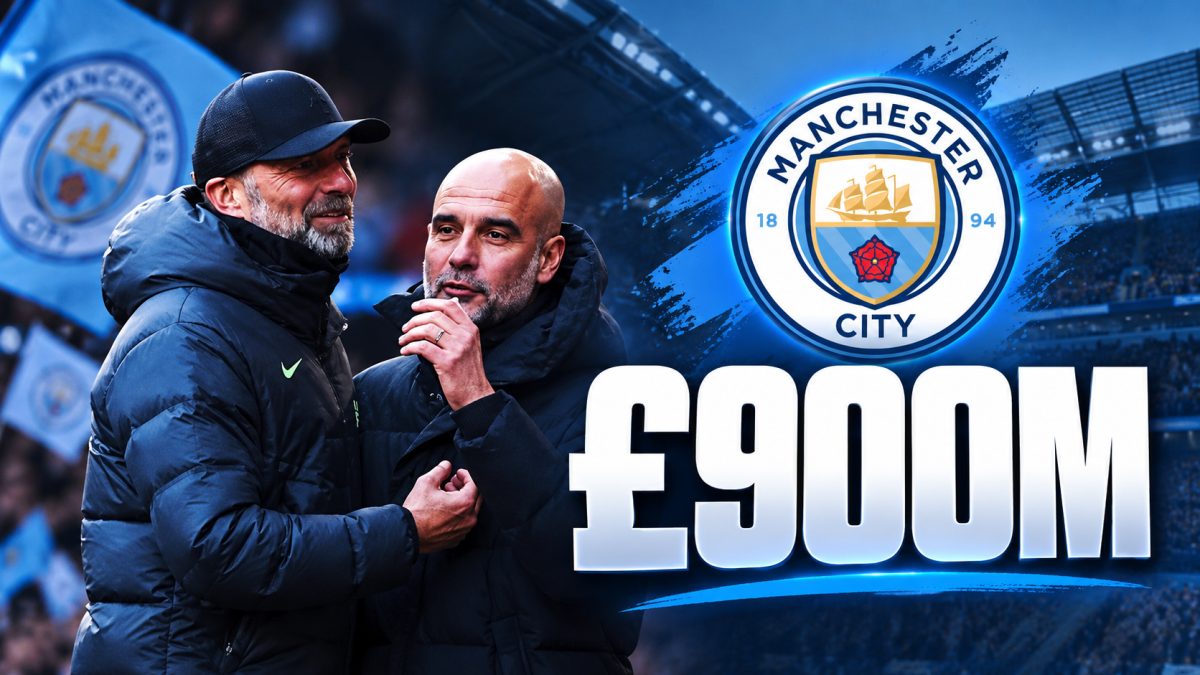

A BBC investigation traces nearly a decade of Manchester City transfer spending after an independent commission found the club overstated commercial revenue by roughly £900 million through disguised owner funding.
The BBC has published an analysis identifying 46 selling clubs across 19 national league systems that received transfer fees from Manchester City between the summer of 2009 and the January 2018 transfer window, the same period covered by the Premier League's financial-breach case. The report, published October 2, 2026, follows the September 29, 2026 verdict in which an independent commission found City guilty of almost all 115 financial charges brought against it, including arranging "sham" commercial contracts to disguise more than £830 million in owner funding as sponsorship income.
How the Commission's Findings Reshape the Transfer Narrative
The BBC's transfer-market review does not allege that individual deals were illegitimate. Instead, it places the club's recruitment spending — ranked in descending order of total fees paid to each selling club — against the backdrop of financial figures the commission says were materially distorted. According to findings reported by The Athletic, City declared £949.9 million in commercial income from Abu Dhabi-linked sponsors across the 2009-10 to 2017-18 seasons, but only £119.3 million was actually paid by those sponsors, with the remaining £830.7 million funnelled through Abu Dhabi United Group (ADUG), the club's owner.
That gap is central to understanding why the transfer list matters. A club able to present owner funding as commercial revenue could appear more compliant with Premier League and UEFA financial controls while retaining the capacity to outspend rivals in the transfer market. The commission's written findings, as detailed by the Premier League, described the sponsorship arrangements as "sham" deals forming part of a broader scheme to "artificially inflate the club's revenues and reduce its costs."
Why Sensex and Nifty's Fate This Week Hinges on Iran Talks and the Strait of Hormuz
Tracing the Money Across 19 Football Systems
The BBC's dataset spans English football and major European leagues alongside clubs from a wide range of smaller national systems, reflecting the breadth of Manchester City's recruitment strategy since Sheikh Mansour's Abu Dhabi-backed takeover in 2008. The club's transformation from mid-table underachievement to sustained Premier League title contention — including championships in 2011-12, 2013-14 and 2017-18 — required a scouting and purchasing operation that reached far beyond England's traditional transfer markets.
One of the report's more striking details concerns Portugal, where City paid broadly similar total sums to both Benfica and Porto while paying nothing at all to Sporting, the third club in the country's historic "big three." The pattern, the BBC notes, suggests City's dealings were shaped by scouting relationships, agent networks, ownership structures and player availability rather than any deliberate strategy of engaging every leading club within a given market.
Sell-On Clauses Reveal Hidden Beneficiaries
The investigation also highlights how headline transfer fees frequently understate the full financial picture, since sell-on clauses can redirect portions of a fee to clubs no longer directly involved in a deal. When City signed John Stones from Everton in 2016, approximately £7 million of the transfer fee was passed on to Barnsley, reflecting a sell-on entitlement tied to Stones' earlier career at the Yorkshire club.
A similar arrangement applied to Joleon Lescott's 2009 move from Everton to Manchester City, City's first major close-season signing under the new ownership. Everton reportedly had to forward about £2.5 million to Wolverhampton Wanderers under a sell-on clause from Lescott's earlier transfer. These examples illustrate that the BBC's club-by-club ranking reflects contractual payment flows rather than a simple record of who ultimately kept the money — and crucially, the BBC's reporting makes clear that appearing on the list does not imply any selling club knew of or benefited improperly from the accounting arrangements under scrutiny.
The Scale of the Alleged Financial Deception
The commission's quantified conclusion, reported by The Athletic, found City's income overstated by £855.2 million on the principal sponsorship allegations — £830.7 million tied to disguised ADUG payments and a further £24.5 million linked to Fordham, a company the commission described as "little more than a front for ADUG." Other outlets, including ESPN and the Associated Press, describe the wider effect of the schemes, once reduced costs and related devices are factored in, as exceeding £900 million.
Premier League chief executive Richard Masters, quoted by ESPN, said the findings showed City had "systematically broke Premier League rules for nearly a decade." The league's official statement said City's commercial partners were "only required to pay a portion of the relevant sponsorship fees," with the arrangements misrepresenting "the true agreement between the parties." The commission's full report runs to approximately 750 pages and also examined alleged manipulation of image-rights agreements and off-the-books payments, according to ESPN's Gab Marcotti.
What Comes Next for City and Its Trading Partners
Manchester City has consistently denied wrongdoing throughout the long-running case and retains the right to challenge the commission's findings through the applicable legal process; the club's detailed response to the verdict was not fully available in current reporting. The verdict has also prompted calls, noted by the BBC, for HM Revenue & Customs to examine potential tax implications of the disguised funding arrangements, though any formal tax investigation would require separate assessment.
The transfer-market findings and the financial verdict now head toward a sanctions and appeals phase whose outcome remains unresolved. Commentary has ranged from calls for restitution to rival clubs to broader questions about the competitive distortion created by nearly a decade of disputed spending. Until sanctions are decided and any appeal by Manchester City is resolved, the full consequences — for the club's titles, its transfer dealings and its financial future — remain, in the words of ongoing analysis, speculative rather than settled.