
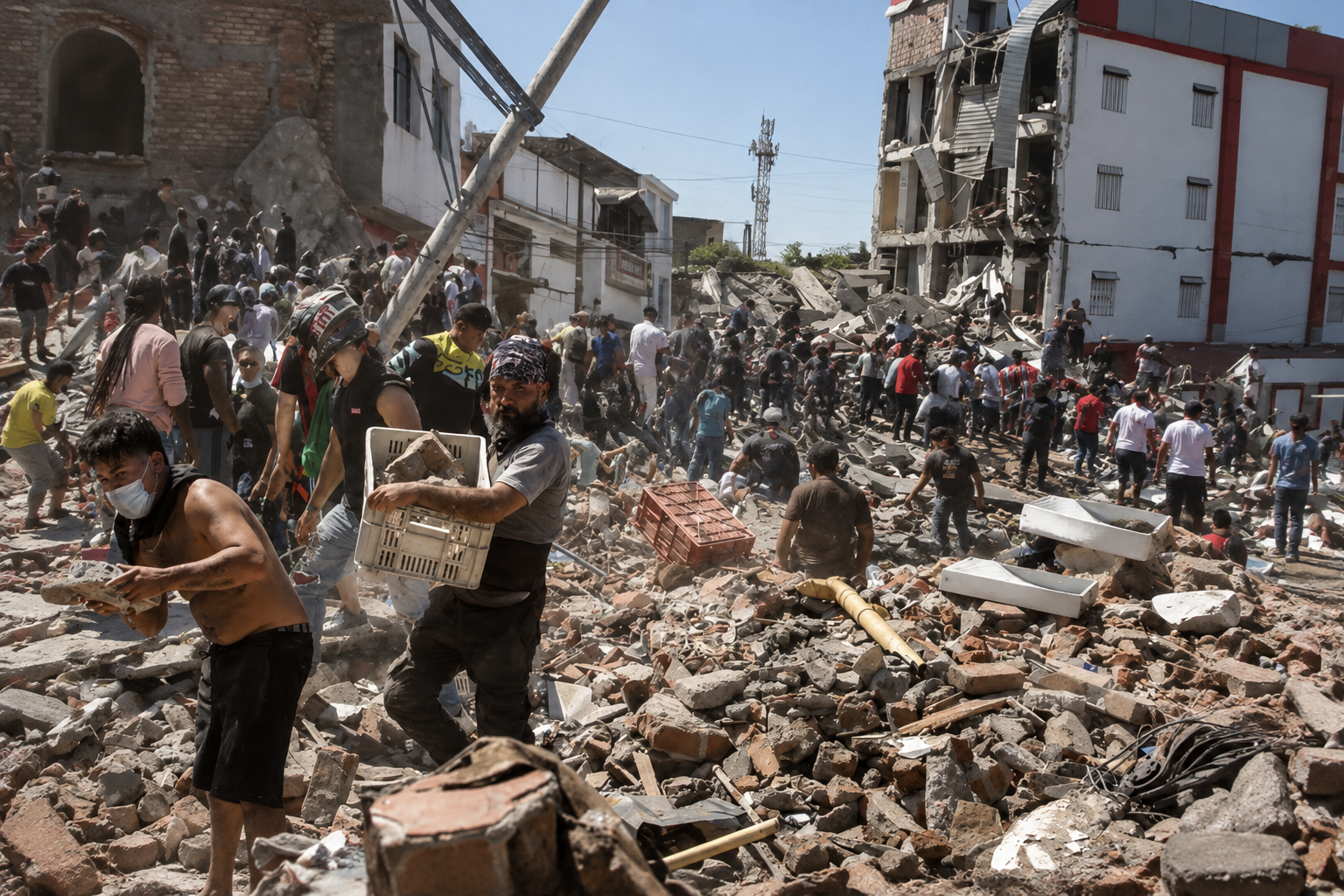

Coastal communities scramble to higher ground as seismologists warn aftershocks could continue for days.
A powerful magnitude 7.4 earthquake struck off the Pacific coast early Tuesday morning, sending shockwaves through coastal towns and prompting immediate tsunami warnings across a 400-mile stretch of shoreline. The quake, which hit at approximately 5:12 a.m. local time roughly 60 miles offshore, was felt as far as 150 miles inland, according to the United States Geological Survey. Emergency officials say the cause is linked to sudden tectonic movement along a major fault line, and authorities are now racing to assess damage while urging residents to remain vigilant for aftershocks.
Initial Shock and Immediate Emergency Response
Within minutes of the quake, emergency sirens sounded in coastal cities, sending thousands of residents fleeing toward designated high-ground shelters. Local police and fire departments activated emergency operation centers, coordinating with the National Weather Service and regional tsunami warning systems to manage the unfolding crisis.
Governor's offices in the affected states declared states of emergency within the hour, freeing up National Guard resources and emergency funding. Highway patrol units shut down several coastal roadways to allow faster movement of emergency vehicles and evacuating civilians.
Tsunami Warnings Prompt Mass Evacuations
The National Tsunami Warning Center issued alerts for coastal areas within minutes of the initial tremor, estimating wave heights could reach up to 10 feet in low-lying zones. Sirens blared in at least a dozen towns, triggering what officials described as one of the largest coordinated evacuations in the region's recent history.
Buses and emergency shuttles were deployed to transport elderly residents and those without vehicles to inland shelters. Schools and hospitals near the shoreline initiated lockdown and relocation protocols, while fishing vessels and harbor authorities scrambled to move boats away from vulnerable ports.
Structural Damage and Early Casualty Reports
Preliminary reports indicate significant structural damage to older buildings, bridges, and utility infrastructure near the epicenter. Several apartment complexes have been red-tagged as unsafe for occupancy, and power outages have been reported affecting tens of thousands of households.
Local hospitals report an influx of patients with minor injuries from falls and debris, though officials have not yet confirmed any fatalities. Search and rescue teams, along with structural engineers, are conducting building-by-building assessments in the hardest-hit neighborhoods to identify anyone trapped or in danger.
Scientists Warn of Continued Aftershock Risk
Seismologists monitoring the fault line say aftershocks measuring up to magnitude 5.5 are likely in the coming days, and residents have been urged not to return to evacuated zones until officials give the all-clear. Experts note that this event ranks among the strongest to hit the region in over two decades.
Researchers are also studying whether this quake could increase pressure on adjacent fault segments, raising concerns about future seismic activity. Continuous monitoring stations have been placed on high alert, feeding real-time data to emergency planners.
Community Response and Recovery Efforts Underway
Volunteer organizations and the Red Cross have begun setting up temporary shelters equipped with food, water, and medical supplies for displaced families. Local businesses are also stepping in, offering free transportation and supplies to those affected.
Federal emergency management officials are expected to arrive within 48 hours to begin damage assessments that could unlock additional disaster relief funding. Community leaders are urging patience and cooperation as recovery operations ramp up in the days ahead, emphasizing that safety remains the top priority while the region works to stabilize after this major seismic event.